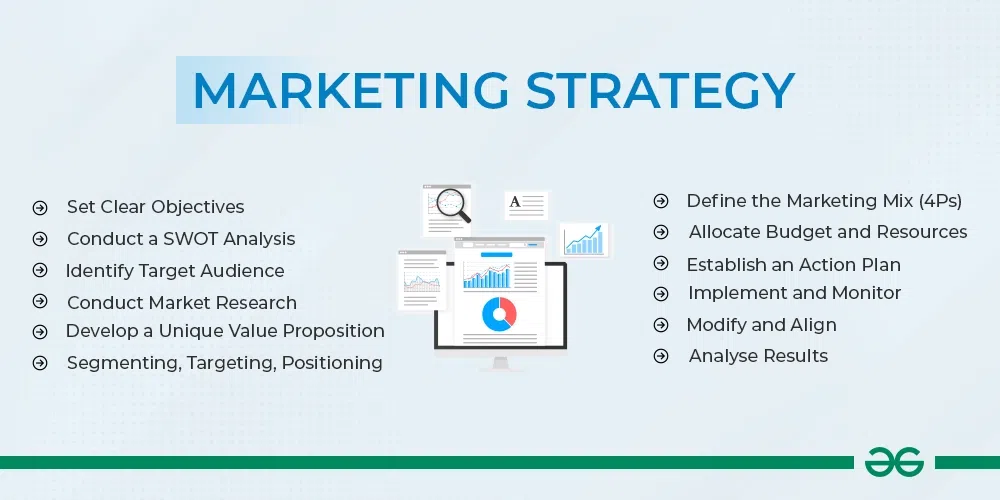
Most New Businesses Get This Backwards
A lot of new founders start by picking a marketing channel — Instagram, Google Ads, maybe a billboard if they’re feeling bold — before they’ve even figured out who they’re selling to. That’s backwards. A solid marketing strategy for a new business starts with clarity, not tactics.
I’ve seen small business owners burn through their entire first marketing budget on ads that reached the wrong audience, simply because they skipped the strategy step and jumped straight to execution.
Define Your Actual Customer First
Direct answer: A marketing strategy for a new business should begin with a specific customer profile — age, location, income level, and the exact problem they’re trying to solve — not a broad “everyone needs this” assumption.
Write down:
- Who exactly buys this (be specific — “working mothers in Tier-2 cities aged 28-40,” not “women”)
- What problem you solve better than alternatives
- Where this person already spends time online or offline
Set One Clear Goal Before Anything Else
Trying to “increase brand awareness AND drive sales AND build a community” all at once with a limited budget dilutes everything. Pick one primary goal for the first 90 days — usually early sales or lead generation for a brand-new business.
Choose 2-3 Channels, Not Ten
New businesses often spread themselves across every platform, doing all of them poorly. Instead:
- Pick the one channel where your audience already spends the most time
- Add a second channel only once the first is generating consistent results
- Treat everything else as experiments with small, capped budgets
Build a Simple Content Calendar
Consistency beats perfection here. A basic weekly rhythm — say, 3 posts and one longer piece of content — works better than sporadic bursts of ten posts followed by silence for a month.
[link to related guide on content marketing tips here]
Allocate Budget Based on Testing, Not Guessing
Start with small test budgets across your chosen channels — even ₹500-1000 per day is enough to gather early signals. Double down on what performs, cut what doesn’t, within the first 2-3 weeks.
Track These Metrics From Day One
- Cost per lead or cost per sale
- Website traffic sources
- Conversion rate from visitor to customer
Vanity metrics like follower count feel good but rarely pay bills early on.
Revisit Your Strategy Every Quarter
What worked at launch often stops working as the market shifts or competitors adjust. Set a calendar reminder every 90 days to honestly review what’s working and cut what isn’t.
Suggested image alt text: “small business owner planning marketing strategy on whiteboard”
FAQ
Q: How much should a new business spend on marketing? A common starting benchmark is 7-10% of projected revenue, though very early-stage businesses often start smaller and scale up as results prove out.
Q: What is the first step in creating a marketing strategy? Defining your specific target customer clearly, before choosing any channel or tactic.
Q: Which marketing channel works best for new businesses? It depends entirely on where your specific audience spends time — there’s no universal best channel.
Q: How long does it take to see marketing results for a new business? Most businesses see early signals within 4-6 weeks, though meaningful traction often takes 3-6 months of consistent effort.
Q: Should a new business hire a marketing agency right away? Not necessarily — many founders benefit from running basic marketing themselves first to understand what works before outsourcing.
Conclusion
A strong marketing strategy for a new business isn’t about doing everything at once — it’s about knowing exactly who you’re talking to and picking a few channels to focus on deeply. Define your customer, set one clear goal, and test small before scaling. Start by writing down your ideal customer’s profile today, on paper if you have to.